








How to Grind Weed: The Complete Guide to Perfect Consistency Every Time
Whether you're packing a palm leaf cone for the first time or you've been rolling for years, grinding your herb properly is one of those foundational skills that separates a good session from a great one. The grind affects everything — how evenly it burns, how easy it is to pack, how well air flows through, and ultimately how much you enjoy the experience. And yet, it's one of the most overlooked steps in the whole process.
This guide covers everything you need to know about how to grind weed the right way — from the basics of using a grinder to what to do when you don't have one on hand. We'll also break down grind consistency for different smoking methods, the most common mistakes people make, and how the right tools (like a quality electric grinder) can make the whole thing effortless.
Why Grinding Your Weed Actually Matters
Some people skip the grinder entirely and just break up their herb by hand. It works, but it leaves a lot on the table. Here's why a proper grind makes a real difference:
Even burn. When herb is ground to a consistent size, it burns at a uniform rate. Hand-broken pieces vary in size, which leads to hot spots, runs, and canoeing in joints and cones.
Better airflow. Ground herb is loosely packed with small air pockets between particles. Clumpy, hand-torn pieces can create dense plugs that restrict airflow and make draws harder.
More surface area. A finer grind exposes more surface area to heat, which means more efficient vaporization and combustion. You get more out of the same amount of herb.
Consistent packing. If you're filling cones or packing a bowl, evenly ground herb fills the space more predictably, making it easier to get the density right every time.
How to Use a Grinder: A Step-by-Step Guide
If you're new to using a grinder, the process is straightforward. Here's how to do it right.
Step 1: Break Down Your Herb
Start by removing any large stems. You don't need to break the herb into tiny pieces before loading it — just remove anything that won't fit comfortably in the grinding chamber. Large stems won't grind well and can dull the teeth over time.
Step 2: Load the Grinding Chamber
Place your herb in the grinding chamber, which sits between the top and middle pieces of the grinder. Load it evenly around the teeth, avoiding the center post — that area doesn't grind as effectively. Don't overfill; a half to three-quarters full chamber grinds more efficiently than a packed one.
Step 3: Grind
Place the top lid back on and rotate. With a manual grinder, about 10 to 15 rotations is usually enough, though you'll develop a feel for it. If you feel resistance ease up, that's a sign the herb is ground down. For an electric grinder, it's even simpler — press and hold until you reach the consistency you want.
Step 4: Collect the Ground Herb
Unscrew the grinding chamber from the collection chamber and tap lightly to let ground herb fall through the screen. If any herb is sticking to the teeth or walls, a small brush (most grinders include one) can help move it along.
Step 5: Collect Kief (If You Have a 4-Piece)
If you're using a 4-piece grinder, the bottom compartment collects kief — the fine, powdery trichomes that fall through the screen. Over time this builds up into a potent reserve. A coin in the collection chamber (the middle section, above the kief catch) helps knock more kief through with each use.
Types of Grinders
Not all grinders are the same. Knowing the options helps you pick the right one for how you smoke.
2-Piece Grinders
The most basic option — a top and bottom piece with grinding teeth. They're compact, affordable, and easy to use. The downside is that your herb collects directly in the grinding chamber, mixed with the teeth, and there's no kief catch.
4-Piece Grinders
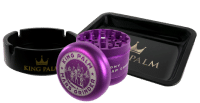
The most popular style for good reason. Four pieces means a top lid, a grinding chamber, a collection chamber with a mesh screen, and a kief catch at the bottom. You get consistently ground herb and a bonus kief reserve over time.
Card Grinders
Card grinders are flat, credit card-sized graters you can keep in your wallet. They're convenient for travel and discreet, though they require a bit more manual effort and don't collect herb as neatly. King Palm carries card grinders if portability is your priority.
Electric Grinders
Electric grinders are the upgrade worth considering if you grind frequently or want the most consistent results with zero effort. King Palm's electric dry herb grinder handles the work for you — press a button and get a perfect, consistent grind in seconds. No hand fatigue, no uneven chunks, no guesswork. It's particularly useful when you're packing multiple cones at once.
How to Grind Weed Without a Grinder
Sometimes you're without a grinder and need to make it work. There are several methods that get the job done — some better than others.
Scissors and a Shot Glass
This is the most reliable no-grinder method. Drop your herb into a shot glass and use a pair of sharp scissors to chop it up. The glass keeps everything contained and the scissors give you real control over consistency. Aim for uniform, small pieces. Takes about 30 seconds with practice.
Using Your Hands
The most obvious method, and the least ideal. Use your fingernails or fingertips to break the herb into small pieces. The downsides: it's slow, sticky resin transfers to your fingers and is wasted, and the consistency is hard to control. Works in a pinch but should be a last resort.
Pill Bottle and a Coin
Place your herb in a small pill bottle or container along with a clean coin. Seal the top and shake vigorously for 30 to 60 seconds. The coin bounces around and breaks up the herb. Results are uneven, but it's a workable method when you have nothing else available.
Knife and Cutting Board
Treat it like chopping herbs in the kitchen. Place your herb on a clean cutting board and use a sharp knife to chop it down to size. You can get a surprisingly consistent grind this way if you take your time. Keep the herb in a small pile as you work to minimize mess.
Coffee Grinder
A clean coffee grinder can actually do an excellent job — sometimes too good. It's easy to over-grind and end up with a powder-fine consistency, which isn't ideal for most smoking methods. If you go this route, pulse it in short bursts and check frequently. Make sure the grinder is clean and free of any coffee residue first.
Grind Consistency for Different Consumption Methods
The right grind isn't the same for every method. Getting the consistency matched to how you're consuming makes a meaningful difference in the experience.
Joints and Cones: Medium Grind
For joints and pre-coned wraps, a medium grind is the sweet spot. Too fine and the herb burns too fast and can pull through; too coarse and airflow suffers and the burn is uneven. You want pieces that are broken down but still have some texture — not powder, not chunks.
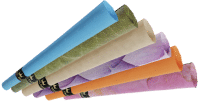
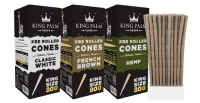
This is especially important when filling palm leaf cones. King Palm's natural palm leaf cones are pre-formed and ready to pack — no rolling required. A medium grind fills the cone evenly from tip to filter, and the included packing stick lets you tamp it down to the right density without compacting it too tight. The result is a smooth, even draw from start to finish.
Bowls: Medium-Coarse Grind
Bowls do well with a slightly coarser grind than joints. Finer grinds can get sucked through the bowl's hole, wasting herb and clogging the pipe. A medium-coarse grind sits in the bowl cleanly, burns evenly, and stays put through the hit.
Vaporizers: Fine Grind
Dry herb vaporizers need the most surface area exposed to the heating element, so a finer grind is ideal here. The more evenly the heat can reach every particle, the better the extraction. Most vaporizer manufacturers recommend grinding fine for this reason.
Common Grinding Mistakes to Avoid
Even a simple process has ways to go wrong. These are the most common mistakes and how to sidestep them.
Over-Grinding
More rotations don't always mean better results. Over-grinding turns herb into a fine powder that can restrict airflow, burn too quickly, and pull through screens and filters. Once the resistance lightens up, stop — it's done.
Under-Grinding
Leaving chunks that are too large creates uneven packs and uneven burns. If you're finding large pieces in your collection chamber, give it a few more rotations before assuming it's ready.
Grinding Stems
Stems don't contribute much to the experience and can dull grinder teeth over time. Pick them out before loading. Large stems can also puncture thin rolling papers or create hard spots in a packed cone.
Not Cleaning Your Grinder
Resin and fine herb particles build up on the teeth and screens over time, making the grinder harder to turn and reducing grinding efficiency. A quick clean every few weeks — using a small brush and isopropyl alcohol for a deeper clean — keeps everything working smoothly.
Grinding Wet or Moist Herb
Herb that's too wet clumps rather than grinds. It sticks to the teeth, clogs the screen, and produces an inconsistent, difficult-to-work-with result. Herb should be properly dried and cured before grinding for the best consistency.
King Palm Products That Make Grinding and Packing Easier
Once you've nailed the grind, having the right products for the rest of the process makes everything easier.
King Palm's electric dry herb grinder is built for people who want consistent results without the manual effort. It produces a uniform grind every time — no over-grinding, no chunky spots, no hand fatigue from working through a full session. For anyone who fills cones regularly, it's a genuine quality-of-life upgrade.
If you prefer manual options, King Palm's full grinder collection includes card grinders and traditional manual grinders at a range of price points.
Once your herb is ground, King Palm's natural palm leaf cones are ready to receive it directly. The cones are pre-coned — they come fully formed, so there's no rolling involved. Each cone includes a corn husk filter at the base for a cleaner draw and comes packaged with a Boveda-style humidity pack to keep the palm leaf wrap fresh and properly hydrated until you're ready to use it. Just fill, use the included packing stick to tamp down evenly, and you're ready.
King Palm offers leaf tubes in a variety of sizes — from mini to extra large — so you can match the cone to the occasion. They also carry flavored options if you want a hint of natural flavor alongside your herb. Everything is tobacco-free and made from real palm leaf, with no artificial additives.
Frequently Asked Questions
How fine should you grind weed?
It depends on the consumption method. For joints and cones, a medium grind is ideal — pieces broken down but still textured, not powder. For vaporizers, go finer to maximize surface area. For bowls, a medium-coarse grind works best to prevent herb from pulling through the bowl hole. The general rule is: when in doubt, go medium. You can always grind a little more, but you can't un-grind.
Can you grind weed without a grinder?
Yes. The most reliable method is scissors and a shot glass — drop your herb in the glass and chop with the scissors for about 30 seconds. A knife and cutting board also works well if you treat it like chopping fresh herbs. A clean coffee grinder can work too, but pulse in short bursts to avoid over-grinding. Hands are the last resort since resin sticks to your fingers and consistency suffers.
How many times should you rotate a grinder?
About 10 to 15 rotations is a good starting point for most grinders and most amounts of herb. You'll notice the resistance ease up as the herb breaks down — that's your signal it's done. Avoid grinding well past that point, as over-grinding produces too-fine a consistency for most smoking methods.
Does grinding weed make it stronger?
Grinding itself doesn't increase potency, but it does improve efficiency. A proper grind maximizes surface area exposure to heat, which means more complete combustion or vaporization. You'll extract more from the same amount of herb compared to unevenly broken hand-torn pieces. A 4-piece grinder also collects kief over time, which is a potent byproduct of the grinding process.
How do you keep weed from sticking to the grinder?
Regular cleaning is the main solution. Resin buildup is what causes sticking. A small brush clears loose debris; for deeper cleaning, disassemble the grinder and soak the pieces in isopropyl alcohol, then rinse and dry thoroughly before reassembly. Some people also place their grinder in the freezer for 10 to 15 minutes before grinding — the cold makes resin less sticky and the herb less likely to cling to the teeth and walls.
What size grinder should I get?
For personal use, a 2-inch grinder is portable and convenient. For home use where capacity matters more than portability, a 2.5-inch or larger grinder gives you more room per grind. If you pack cones or roll regularly, a 4-piece grinder that collects kief is worth the upgrade. If you want the simplest, fastest option, an electric grinder eliminates the manual work entirely and delivers consistent results regardless of how much herb you're processing.


