
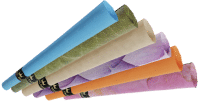
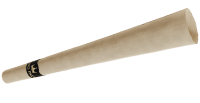
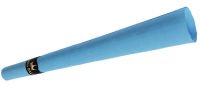
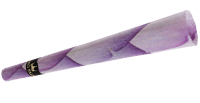






King Palm vs. Hemp Wraps: What's Actually Different?
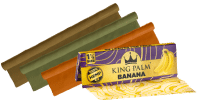
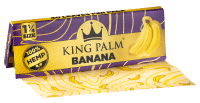
Hemp wraps have carved out a real place in the market as a tobacco-free alternative to traditional blunt wraps. No nicotine, no tobacco leaf — and brands like High Hemp, Twisted Hemp, Juicy Jay's, Wild Hemp, and Hempire have built genuine followings among smokers who want to leave Backwoods and Swisher Sweets behind.
King Palm is in the same general conversation — tobacco-free, no nicotine, a natural product — but the similarities largely stop there. The material is different, the manufacturing process is fundamentally different, the flavor delivery system is in a different category entirely, and the burn characteristics are distinct enough to matter.
This is a full breakdown of how the two compare across every factor that actually affects your session.
Material: What You're Actually Smoking
This is the most fundamental difference between the two products, and it shapes everything else.
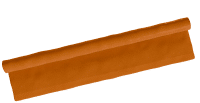
Hemp wraps are not a natural leaf. They're a manufactured sheet — a processed material made by grinding the hemp plant (including stalks, leaves, and other biomass) into a pulp or powder, then pressing and forming that material into thin, uniform sheets. This is a machine-driven manufacturing process borrowed from the tobacco sheet industry, where the same technique is used to produce the reconstituted tobacco leaf found in most cigarillos. The resulting wrap is homogenized hemp paper — consistent and uniform, but processed.
Because ground hemp matter doesn't hold together well on its own, binders and gumming agents are added during manufacturing to give the sheet structural integrity. The water bonds formed during this process are what give hemp wraps their strength — which is also why they're so sensitive to drying out. When hemp wraps lose moisture, those bonds weaken and the wrap becomes brittle, crumbly, and prone to cracking. This is a known and widely documented challenge with hemp wraps that every major brand acknowledges.
King Palm is made from a whole, unprocessed natural leaf — the Cordia palm leaf, hand-harvested and dried. There's no pulping, no pressing, no reconstitution, no binders, and no gumming agents. The leaf goes from the tree to a drying process that sets its hollow shape, and then into the pouch. What you're smoking is an actual leaf, not a sheet manufactured to resemble one.
That's not a marketing distinction — it's a meaningful difference in what the product is at a fundamental level.
How They're Made: Natural vs. Processed
To understand why King Palm and hemp wraps feel and smoke differently, it helps to understand what happens before they reach the pouch.
Hemp wrap production follows a sheet-forming process. Hemp biomass is ground down, mixed with water and binding agents to create a cohesive slurry, pressed into flat uniform sheets, dried under controlled conditions, and then cut to size. It's the same industrial sheet-forming process used to make reconstituted tobacco — just with hemp instead. The result is a consistent, machine-made product with uniform thickness and density across every wrap.
King Palm production is agricultural and handcraft. Cordia palm leaves are harvested, cleaned, and hand-rolled into tubes at our facilities. The rolling process forms the hollow shape, and a drying stage sets that shape so it holds during packing and smoking. The corn husk filter is added, the paper band is applied to secure the seam, and the roll goes into the humidity-controlled pouch. No pulping, no pressing, no reconstitution, no industrial sheet-forming.
The practical consequence of this difference is texture, feel, and behavior. Hemp wraps have the consistency of a thick piece of paper — because that's essentially what they are. King Palm has the texture of a dried leaf — because that's exactly what it is.
Burn Quality: Slow vs. Slower
Both hemp wraps and King Palm are marketed as slow-burning alternatives to tobacco. Both genuinely burn more slowly than rolling papers. But they don't perform the same way, and the gap is noticeable in extended sessions.
Hemp wraps burn at a moderate pace for a processed sheet material. The homogenized structure means an even burn is achievable, but the thinness of the sheet and the sensitivity to moisture mean that a dry hemp wrap can burn noticeably faster and less evenly than a properly hydrated one. Hemp wraps are also more prone to running — burning faster on one side than the other — particularly when the wrap is thin or the pack isn't perfectly even.
King Palm's natural Cordia palm leaf is substantially thicker than a hemp wrap sheet and burns at a genuinely slow pace throughout the session. The natural density and structure of the leaf maintains consistent burn characteristics from start to finish. The corn husk filter also helps regulate airflow, which contributes to a steadier, more controlled burn. In direct comparison, King Palm sessions run notably longer than equivalent hemp wrap sessions at the same fill weight.
Flavor: The Biggest Difference Between the Two
This is where the gap between hemp wraps and King Palm is most significant — and where the most misleading marketing language in the category lives.
Most flavored hemp wraps get their flavor from artificial flavoring that is sprayed directly onto the sheet after manufacturing. The flavoring is designed primarily to create a strong aroma rather than a taste that actually comes through when smoking. The scent when you open the pouch is real — you can absolutely smell grape, mango, or vanilla — but translating that into an actual flavor you taste during the session is a different matter. As one hemp wrap manufacturer's own documentation notes, these flavorings have "very strong smells, but not much taste" — and because smell and taste are closely linked, you get a sense of the flavor without genuinely tasting it the way the name implies.
To keep these sprayed-on flavors from evaporating too quickly, many brands add humectants — moisture-attracting compounds that help the flavoring adhere to the wrap surface. The result is a wrap that smells strongly of its stated flavor in the pouch but delivers a fraction of that flavor in the actual smoke.
King Palm's approach is categorically different. The wrap itself is unflavored natural palm leaf — no sprays, no infusions, no additives. The flavor lives in the corn husk filter at the mouthpiece end, inside a sealed terpene-infused bead. The bead stays inert and protected until you choose to activate it by squeezing the tip until you feel it pop. When you activate it, the flavor releases directly at the point of inhalation and delivers a genuine, full taste that you actually experience rather than just smell.
Beyond the intensity difference, the control is fundamentally different. With a hemp wrap, the flavor — whatever amount makes it through — is present from the moment you light up and fades as the session progresses, whether you want it or not. With King Palm's Squeeze & Pop system, you decide when the flavor drops. You can smoke the first half of a roll enjoying your flower's natural terpene profile, then activate the bead for a flavored finish. Or activate at the start. Or never — the roll is complete without it. That level of control doesn't exist with any spray-on flavored wrap.
Freshness and Handling
Hemp wraps have a well-known freshness problem. Because their structural integrity depends on water bonds formed during the sheet-manufacturing process, moisture loss directly weakens the wrap material. A dry hemp wrap doesn't just feel stiff — it crumbles, cracks, and can fall apart before you've finished rolling it. High Hemp's own guidance tells users to exhale breath onto a dry wrap to rehydrate it before rolling. Multiple brands recommend keeping hemp wraps in humidors and acknowledge that dry wraps may take up to 48 hours to fully rehydrate.
King Palm rolls are also moisture-sensitive — they're a dried natural leaf, and maintaining the right humidity level matters. But the mechanism is different. A King Palm roll that's lost moisture becomes stiff and needs gentle rehydration before packing, but the leaf doesn't crumble or disintegrate the way a dried hemp wrap sheet does. The natural leaf structure is inherently more stable than a processed sheet held together by water bonds.
King Palm also includes a 72% humidity pack in every pouch — calibrated higher than the 62% standard used for most cannabis and cigar storage, specifically to keep the natural leaf more hydrated and pliable. Hemp wraps typically rely on resealable pouch packaging without an included humidity pack, placing the moisture management responsibility more squarely on the smoker.
Rolling Experience
Hemp wraps require rolling — you get a flat sheet, and you're responsible for getting it around your herb, sealing it, and finishing the tip. The rolling process with hemp wraps has its own learning curve: the material tears more easily than tobacco leaf, the seal requires moisture and pressure to hold, and closing the tip needs a delicate touch — several manufacturers specifically warn that twisting the tip of a hemp wrap will cause it to crack and fall apart.
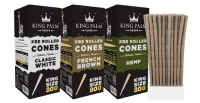
King Palm pre-rolled cones eliminate the rolling step. The cone is already formed, the corn husk filter is already in place, the packing tool is included, and the process is load, tamp, twist, and smoke. There's no rolling skill required, no sealing, and no risk of tearing the wrap during the roll. For smokers who want a blunt experience without the rolling process, King Palm's pre-rolled format is a straightforward advantage.
King Palm also offers flat wraps for smokers who prefer to roll — the palm leaf wrap format gives you the traditional rolling experience with natural leaf material rather than processed hemp sheet. Either way, the material holds up to rolling better than hemp wrap sheet, which is both thinner and more structurally fragile.
Side-by-Side Comparison
Factor
Hemp Wraps
King Palm
Material
Homogenized hemp sheet — processed
Whole natural Cordia palm leaf
Manufacturing
Machine-pressed from ground hemp biomass
Hand-harvested and hand-rolled leaf
Binders/additives
Yes — gumming agents required
None
Nicotine
None
None
Tobacco
None
None
Burn speed
Moderate — can vary with moisture
Slow and consistent throughout
Flavor delivery
Sprayed onto wrap — aroma-forward, light taste
Squeeze & Pop filter bead — full on-demand flavor
Flavor control
On from the start, fades as it burns
Activated when you choose, at any point
Rolling required
Yes — flat sheet format
Cones: no. Flat wraps: yes
Freshness sensitivity
High — crumbles when dry
Moderate — stiffens but doesn't crumble
Humidity pack included
Not typically
Yes — 72% in every pouch
Filter included
Not typically
Yes — corn husk filter in every cone
Who Each Is Built For
Hemp wraps are for smokers who want a flat sheet format, enjoy the rolling process, and prefer a familiar blunt-adjacent experience without tobacco. Brands like High Hemp, Twisted Hemp, Juicy Jay's, and Hempire serve this well. The flavor is atmospheric rather than pronounced, the rolling experience is traditional, and the product is widely available.
King Palm is for smokers who want a genuinely natural product — whole leaf, no processing, no binders — with a slower burn, an actual on-demand flavor system rather than a spray-on scent, and the option to skip rolling entirely with a pre-formed cone. It's the choice for smokers who want more from their wrap than a tobacco-free version of something that already existed.
→ Shop King Palm Wraps & Cones
Frequently Asked Questions
Are King Palm rolls the same as hemp wraps?
No — they're fundamentally different products. Hemp wraps are manufactured sheets made by grinding hemp biomass into a pulp and pressing it into uniform paper-like sheets, similar to how reconstituted tobacco sheets are made. King Palm rolls are made from whole, unprocessed Cordia palm leaf — an actual natural leaf, not a processed sheet. The material, manufacturing process, burn characteristics, and flavor delivery are all distinct.
Why do flavored hemp wraps not taste as strong as they smell?
Most flavored hemp wraps are flavored by spraying artificial flavoring onto the sheet surface after manufacturing. These sprayed-on flavorings are designed primarily to create a strong aroma, but the taste that actually comes through when smoking is significantly more subtle. Because smell and taste are linked, you perceive a sense of the flavor without genuinely tasting it the way the name implies. King Palm's Squeeze & Pop system is different — the flavor is sealed inside a terpene-infused bead in the corn husk filter and releases directly at the point of inhalation when you choose to activate it, delivering a full, genuine taste rather than a scent effect.
Do hemp wraps burn slower than King Palm?
No. King Palm's natural Cordia palm leaf is thicker and denser than a processed hemp wrap sheet, and burns more slowly and consistently throughout the session. Hemp wraps burn at a moderate pace for a processed sheet material, but the thinness of the sheet and sensitivity to moisture mean the burn rate can vary — a dry hemp wrap tends to burn faster and less evenly than a well-humidified one. King Palm's burn rate is more consistent session to session because the natural leaf structure is less variable.
Which brands of hemp wraps are most popular?
Do King Palm cones require rolling?
No. King Palm cones are pre-rolled — the cone shape is already formed, the corn husk filter is already in place, and the process is load, tamp, and smoke. There's no rolling skill required. King Palm also offers flat palm wraps for smokers who prefer the traditional rolling experience, but the pre-rolled cone format is the most popular option and requires no rolling whatsoever.
Are hemp wraps healthier than King Palm?
Both hemp wraps and King Palm are tobacco-free and nicotine-free, which is the primary health distinction both products make relative to traditional blunt wraps. Neither is a safe smoking product. The material difference is that hemp wraps are a processed sheet with added binders and, in flavored versions, sprayed-on artificial flavorings. King Palm is a whole natural leaf with no binders, no additives, and — in unflavored naturals — nothing added to the leaf at all. The flavored versions use food-grade terpene-infused beads in the filter, not additives in the wrap material itself.


