






Blunt vs. Joint: What's the Difference?
If you've been around smoking culture long enough, this question feels almost too basic — until someone actually asks it, and you realize the answer has more layers than it seems. Blunts and joints are both rolled cannabis, but they're genuinely different experiences: different materials, different burn rates, different sizes, different culture, and a fundamentally different relationship with tobacco.
This guide covers everything that separates the two, runs through the most popular brands in each category, and introduces the third option — King Palm's natural palm leaf rolls — that takes the best parts of both formats and leaves the rest behind.
The Basics: What Each One Is
What Is a Joint?
A joint is ground cannabis rolled in thin rolling paper, typically with a small filter or crutch at the mouthpiece end. That's it — cannabis and paper, nothing else. The paper is the wrapper.
Rolling papers come in a range of materials — hemp, rice, wood pulp, flax — and a range of sizes, from single-wide 70mm papers all the way up to king-size. The most widely recognized rolling paper brands include:
- RAW — The most popular rolling paper brand globally. Known for natural, unbleached hemp and rice papers in a range of sizes. RAW Classic, RAW Organic Hemp, and RAW Black are their core lines.
- Zig-Zag — One of the oldest rolling paper brands in existence, with over 140 years of history. A cultural institution — referenced in hip-hop, featured in films. Available in white, orange, and hemp varieties.
- Elements — Ultra-thin rice papers with minimal ash and a clean burn. Favored by smokers who want the paper to disappear into the experience.
- Juicy Jay's — Flavored rolling papers with a triple-dipped flavoring system that puts taste throughout the paper rather than just at the gumline.
- Blazy Susan — Pink hemp papers that have built a strong following for their slow burn and clean pull.
- Futurola — Amsterdam-born papers made from wood pulp and flax fibers. Known for quality and the Snoop Dogg and Mike Tyson collaborations.
- Rizla — A European staple sold in over 120 countries. Available in multiple burn rates and paper thicknesses for different preferences.
Joints are typically smaller than blunts — most hold between 0.5 and 1 gram — and burn faster due to the thin paper. The paper is largely flavor-neutral, particularly in hemp and rice varieties, meaning your flower's terpene profile comes through clearly without the paper competing with it.
What Is a Blunt?
A blunt is cannabis rolled in a tobacco leaf wrap — either the outer leaf of a cigarillo (which is split open, gutted, and repacked) or a flat tobacco wrap sold specifically for rolling. The tobacco wrap is the defining feature of a traditional blunt. It's thicker than rolling paper, burns more slowly, holds more cannabis, and contributes both nicotine and tobacco flavor to every session.
The most iconic blunt brands in the market are:
- Backwoods — Natural tobacco leaf cigars unrolled and repacked. Known for a rustic, textured look and a strong tobacco flavor. Highly skilled to roll well — the leaf is delicate and tears easily if rushed.
- Swisher Sweets — The most widely available cigarillo brand in the US. Found in virtually every gas station and convenience store. Wide flavor range and relatively easy to work with.
- Dutch Masters — A premium cigarillo with a strong following, particularly in New York. Known for a slower, more even burn than most cigarillos. Rolling a Dutch requires patience but delivers a quality result.
- White Owl — A longtime staple with a milder tobacco profile than Swisher. Comes in many of the same flavor formats. Popular in markets where Swisher is the default alternative.
- Phillies — One of the original mass-market cigarillo brands. Fewer flavor options but consistent quality for traditional blunt rollers.
- Game (Garcia y Vega) — Slightly larger than most cigarillos, which makes them popular among smokers who want more capacity per roll.
- Royal Blunts — Flat tobacco wraps sold specifically for rolling, available in a wide flavor range. Positioned toward smokers who want the tobacco wrap experience without the gutting process.
A blunt holds considerably more than a joint — typically 1 to 3 grams — and burns significantly slower due to the thickness of the tobacco leaf. The nicotine in the wrap contributes a distinct buzz on top of the cannabis experience, which is part of the appeal for traditional blunt smokers and a deterrent for cannabis-only smokers.
Blunt vs. Joint: The Key Differences
Factor
Joint
Blunt
King Palm
Wrap material
Rolling paper
Tobacco leaf
Natural palm leaf
Tobacco
None
Yes — in every session
None
Nicotine
None
Yes — unavoidable
None
Typical fill
0.5–1g
1–3g
0.5–5g (6 sizes)
Burn speed
Faster
Slow
Slowest
Flavor impact
Neutral — flower shines
Tobacco taste added
Neutral — flower shines
Rolling required
Yes
Yes — skill needed
No — pre-formed cone
Filter included
Usually added separately
Not typically
Yes — corn husk built in
On-demand flavor
No
No
Yes — Squeeze & Pop
Burn Rate: Why Blunts Last Longer
The most practical difference between a blunt and a joint in a session is how long it lasts. Blunts burn significantly slower than joints — and the reason is purely the material.
Tobacco leaf is three to four times thicker than rolling paper. That extra material takes longer to combust, which means a blunt at the same fill weight as a joint will run noticeably longer. Add to that the fact that blunts are typically packed with more cannabis than joints, and the session length difference becomes substantial. Blunts are group session material specifically because they go the distance.
Joints burn faster, which makes them more efficient for solo sessions — less side-stream smoke lost to air between draws, quicker from start to finish, and smaller fill weight means you're consuming less per session.
The Tobacco Question
This is the central issue in the blunt vs. joint conversation for a growing segment of the smoking population: blunts contain tobacco, and joints don't.
Every traditional blunt wrap — Backwoods, Swisher, Dutch Masters, White Owl, Phillies, Game, Royal Blunts — is made from tobacco leaf. That means every draw through a traditional blunt includes nicotine, whether you're thinking about it or not. For cannabis-focused smokers who've reduced or eliminated tobacco from the rest of their lives, this is the friction that makes blunts complicated. The format delivers what they want — slow burn, substantial session, passing ritual — attached to something they're actively trying to avoid.
Joints don't have this problem. Rolling papers — RAW, Zig-Zag, Elements, OCB, Rizla, and the rest — contain no tobacco and no nicotine. The trade-off is burn speed and session length. A 0.5-gram joint burns through fast, especially in a group.
The question most smokers eventually land on: is there a way to get the burn speed and session length of a blunt without the tobacco? The answer is yes — and that's where King Palm comes in.
The Third Option: King Palm Palm Leaf Rolls
King Palm's natural Cordia palm leaf rolls occupy a specific position in this conversation — and it's one worth understanding clearly.
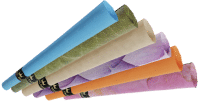
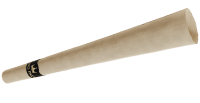
King Palm rolls are pre-formed palm leaf cones. Not tobacco leaf. Not rolling paper. An actual natural leaf, hand-rolled into a hollow cone shape with a corn husk filter built into the mouthpiece end. The result is a format that delivers what blunt smokers are looking for — slow burn, substantial capacity, a session that goes the distance, a filter that keeps the draw clean — without a single ingredient from the tobacco plant.
And the burn? Cordia palm leaf burns slower than tobacco leaf wraps. Slower than hemp wraps. Slower than rolling papers. King Palm rolls consistently produce the longest sessions per gram of any natural wrap format, because the palm leaf's natural density creates more resistance to combustion than any of the alternatives.
What King Palm Gets From Blunts
- Slow burn — Palm leaf burns slower than tobacco wraps, hemp wraps, and rolling papers. The session lasts.
- Substantial capacity — Six sizes from 0.5g (Rollie) to 5g (XXL). Group session capability built in.
- A real mouthpiece — The corn husk filter keeps loose herb out of your mouth, catches flower oils, and maintains consistent airflow — the same job a tobacco wrap's density does at the mouthpiece end.
- The social ritual — Something that's rolled, passed, shared. Same culture, same vibe.
What King Palm Gets From Joints
- Zero tobacco — No tobacco in the leaf, the filter, the packing tool, or anywhere else in the product.
- Zero nicotine — The palm leaf is not tobacco. There is no nicotine in the session unless it's in your flower, which it isn't.
- Clean flavor — The palm leaf doesn't compete with your flower's terpene profile. What you taste is your flower, not your wrap. Exactly like rolling papers.
- No rolling required — Pre-formed cone, load and pack. No splitting, no gutting, no rolling skill needed. Easier than both joints and blunts.
King Palm is tobacco-free with the slow burn of a blunt and the clean flavor of a joint. No rolling skill required. The best of both, without the trade-offs of either.
King Palm's On-Demand Flavor — Something Neither Joints Nor Blunts Have
One thing that's unique to King Palm in this comparison: the Squeeze & Pop flavor system. Neither joints nor traditional blunts offer anything comparable.
Every flavored King Palm roll includes a terpene-infused bead sealed inside the corn husk filter. The wrap is completely neutral until you choose to activate it — squeeze the tip until you feel the pop, and the flavor releases. You control when it happens: at the start, midway through, at the end, or not at all. The session is complete either way.
Flavored rolling papers (Juicy Jay's and similar) apply flavor to the paper surface — the flavor fades as the paper burns and you can't control when it affects the taste. Flavored blunt wraps either rely on the tobacco curing process or spray-on artificial flavoring that smells stronger than it tastes. Neither gives you on-demand control. King Palm does.
King Palm Also Makes Rolling Papers and Paper Cones
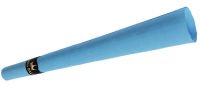
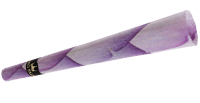
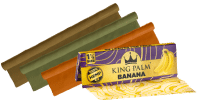
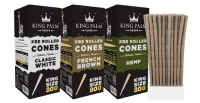
For smokers who want to stay in the joint format, King Palm makes rolling papers in French Brown and hemp varieties, as well as pre-rolled paper cones in colored and hemp formats. These sit alongside the core palm leaf lineup and give joint smokers a way to stay within the King Palm ecosystem.
That said, the palm leaf rolls are the core of what King Palm is — the product that started it all and the reason for the brand's reputation. If you're deciding between a joint and a blunt and wondering where King Palm fits, the answer is the palm leaf roll: it's the format built specifically to land between the two and take the best from each.
→ Shop King Palm Palm Leaf Rolls
→ Shop King Palm Rolling Papers
Frequently Asked Questions
What is the main difference between a blunt and a joint?
The wrap material. A joint is cannabis rolled in thin rolling paper — hemp, rice, or wood pulp — with no tobacco. A blunt is cannabis rolled in a tobacco leaf wrap, either gutted from a cigarillo (Backwoods, Swisher Sweets, Dutch Masters, White Owl) or a flat tobacco wrap. The tobacco wrap gives blunts their slower burn, larger capacity, and nicotine content. Joints burn faster, hold less, and contain no tobacco or nicotine.
Do blunts hit harder than joints?
Blunts are typically larger and hold more cannabis, which contributes to a more intense session overall. The tobacco wrap also adds nicotine to every draw, which creates a distinct buzz on top of the cannabis effect. Joints, by contrast, deliver a cleaner cannabis experience without the nicotine component. Which hits harder in a pure cannabis sense depends more on what's inside than the wrap.
Which is better for solo smoking — a blunt or a joint?
Joints are generally more suited to solo sessions. They're smaller, burn through faster, and the smaller fill weight means less waste. Blunts are designed for group sessions — their slow burn and larger capacity make them ideal for passing around, but for one person, finishing a 2-gram blunt solo is a lot. King Palm Rollies (0.5g) and Minis (1g) offer a solo session in the blunt format without the group-size commitment.
What are the most popular blunt wrap brands?
Backwoods, Swisher Sweets, Dutch Masters, White Owl, Phillies, and Game (Garcia y Vega) are the most widely recognized tobacco-based blunt wrap brands. For tobacco-free alternatives, King Palm (palm leaf), High Hemp, Twisted Hemp, and Juicy Jay's (all hemp wraps) are the most prominent options.
What are the most popular rolling paper brands?
RAW is the most popular globally, followed by Zig-Zag, Elements, OCB, Juicy Jay's, Blazy Susan, Futurola, and Rizla. Each has distinct characteristics — RAW for natural unbleached hemp, Elements for ultra-thin rice paper, Juicy Jay's for flavored papers, Futurola for European-style slow burn.
Is King Palm a blunt or a joint?
Neither exactly — and that's the point. King Palm palm leaf rolls are pre-formed cones made from natural Cordia palm leaf, which is not tobacco and not rolling paper. They burn slower than blunts, contain no tobacco or nicotine, require no rolling skill, come with a built-in corn husk filter, and hold as much or as little as you want across six sizes. They're designed to deliver the blunt experience — slow burn, substantial session, clean draw — with the clean ingredient profile of a joint.
Can I get the blunt experience without tobacco?
Yes. King Palm palm leaf rolls are the most direct answer to this. They deliver a slow burn, substantial capacity, and a full session experience with zero tobacco and zero nicotine. Hemp wraps (High Hemp, Twisted Hemp, Juicy Jay's) are another option, though they require rolling skill and burn faster than palm leaf. King Palm's pre-formed cones also eliminate the rolling step entirely.
Does King Palm make rolling papers?
Yes — King Palm makes rolling papers in French Brown and hemp varieties, and pre-rolled paper cones in colored and hemp formats. These are available alongside the core palm leaf roll lineup. The palm leaf rolls are King Palm's signature product, but the paper options are there for joint smokers who want to stay in the King Palm ecosystem.
Blunts Burn 3x Longer Than Joints Due to Wrap Thickness
The material thickness directly impacts session length. Traditional blunts burn for 10-15 minutes because tobacco leaf wraps are 3-5 times thicker than rolling papers. Joints typically burn through in 3-5 minutes with standard thin papers. This timing difference affects everything from social sessions to solo consumption patterns.
| Feature | Joint | Blunt | King Palm |
|---|---|---|---|
| Burn Time | 3-5 minutes | 10-15 minutes | 10-20 minutes |
| Nicotine Content | None | 3-6mg per wrap | Zero |
| Capacity | 0.5-1g | 1-2g | 0.5-2g (size dependent) |
| Ease of Use | Requires rolling skill | Requires rolling skill | Pre-coned, just pack |
| Flavor Profile | Pure cannabis | Tobacco + cannabis | Natural leaf + cannabis |
Why Wrap Material Matters for Flavor
According to a 2021 survey by Headset, a cannabis analytics firm, 67% of consumers prefer products that don't contain tobacco or nicotine. The wrap material significantly alters what you taste: tobacco wraps add earthy, sometimes sweet tobacco notes that mask cannabis terpenes, while ultra-thin papers aim for neutrality. King Palm's Cordia leaf wraps deliver a subtle, naturally sweet background flavor without tobacco harshness or nicotine.
Storage and Freshness: Pre-Coned Wraps Last Longer With Humidity Control
Rolling papers stay fresh for years in any environment, but tobacco wraps and natural leaf wraps require moisture management. Blunt wraps dry out within weeks without proper storage, becoming brittle and difficult to roll. King Palm addresses this by including a humidity pack in every package, maintaining optimal moisture levels that keep wraps pliable and ready to pack for months after opening.
Cost Comparison Over Time
When comparing price per session, joints appear cheapest at $0.10-0.30 per paper, but require rolling skill and practice papers. Blunt wraps cost $1-3 each and also demand technique. King Palm pre-coned rolls range from $1.50-3.00 depending on size, but eliminate the learning curve entirely—you simply grind, pack, and light. For new smokers, the time and material saved during the learning process makes pre-coned options more economical.
FAQ: Blunt vs Joint
What burns longer, a blunt or a joint?
Blunts burn significantly longer than joints—typically 10-15 minutes compared to 3-5 minutes for joints. The thicker tobacco leaf wrap slows the burn rate considerably. King Palm wraps offer similar extended burn times without any tobacco or nicotine.
Do blunts get you higher than joints?
Blunts don't inherently get you higher, but they hold more cannabis (1-2 grams vs 0.5-1 gram in joints) and the nicotine from tobacco wraps can create a head rush that some interpret as intensifying effects. The cannabis content determines potency, not the wrap type.
Can you roll a blunt without tobacco?
Yes, tobacco-free blunt alternatives exist, including hemp wraps and palm leaf wraps. King Palm offers pre-coned natural leaf wraps that deliver the slow burn and thick wrap feel of traditional blunts without any tobacco, nicotine, or rolling required—just pack and smoke.
Are joints healthier than blunts?
Joints eliminate nicotine exposure since they use paper instead of tobacco wraps, making them a healthier option than traditional blunts. Each blunt wrap contains 3-6mg of nicotine and introduces additional tar from tobacco combustion. King Palm provides a healthier middle ground with natural palm leaves that contain zero tobacco or nicotine.
What's easier for beginners, joints or blunts?
Both joints and blunts require rolling technique that takes practice to master. Blunts are actually harder to roll because tobacco leaves are thicker and less forgiving than paper. King Palm pre-coned wraps eliminate the rolling challenge entirely—beginners simply grind their flower and pack it into the ready-made cone.
Blunts Contain 1-2 Grams of Nicotine Per Wrap
Each tobacco leaf wrap used in a traditional blunt contains between 1 and 2 grams of nicotine, according to research published in the Journal of Analytical Toxicology. This is roughly equivalent to smoking one to three cigarettes alongside your cannabis. For daily blunt smokers, this creates an unintended nicotine dependency that compounds over time, even when the primary intention is cannabis consumption.
The nicotine absorption happens passively through inhalation of the tobacco wrap smoke, not the cannabis itself. Many regular blunt smokers report withdrawal symptoms like irritability and headaches when they switch to joints or other tobacco-free formats — not because they're consuming less cannabis, but because they're eliminating the nicotine they didn't realize they were addicted to.
King Palm wraps eliminate this issue entirely by using Cordia leaves, a natural palm leaf that's been used in traditional smoking practices for centuries but contains zero tobacco and zero nicotine. Every King Palm pack includes a humidity pack to keep wraps fresh and pliable without chemical additives.
Rolling Papers vs Tobacco Wraps: Burn Temperature Comparison
| Format | Average Burn Temp | Harshness Level | Tobacco Content |
|---|---|---|---|
| Joint (thin paper) | 900-950°F | Low | None |
| Blunt (tobacco wrap) | 1050-1150°F | High | Yes (1-2g nicotine) |
| King Palm (Cordia leaf) | 950-1000°F | Low-Medium | None |
The higher burn temperature of tobacco wraps contributes to throat irritation and a harsher smoke profile. King Palm's natural leaf wraps burn at a moderate temperature that provides the slow-burning thickness of a blunt without the excessive heat and chemical byproducts of combusting tobacco.
Price Per Session: Which Format Costs More
A single blunt wrap typically costs $0.99-$2.50 depending on brand and format, while rolling papers cost approximately $0.03-$0.10 per joint. This makes joints significantly cheaper on a per-session basis, but the calculation changes when factoring in cannabis capacity and sharing scenarios.
Blunts hold 1-3 grams of cannabis and are designed for group sessions, making the per-person cost more economical when split among 3-5 people. Joints typically hold 0.5-1 gram and are better suited for solo sessions or pairs. King Palm pre-coned wraps are priced competitively with premium blunt wraps but eliminate the learning curve of rolling — you simply pack your cannabis into the pre-coned wrap and light it.
The inclusion of a humidity pack in every King Palm package also extends shelf life and prevents waste from dried-out wraps, a common issue with both traditional blunt wraps and rolling papers that are improperly stored.
Social Settings and Format Preference
Blunts dominate group smoking sessions, with 68% of cannabis consumers preferring blunts over joints when smoking with three or more people, according to data from Headset Analytics. The slower burn time and larger capacity make blunts the practical choice for rotation scenarios where a joint would burn out too quickly.
Joints are preferred for solo sessions and flavor-focused experiences where terpene preservation matters more than session length. The thinner paper allows more of the flower's natural flavor profile to come through without competition from wrap flavor or tobacco notes.


